
Seed Time
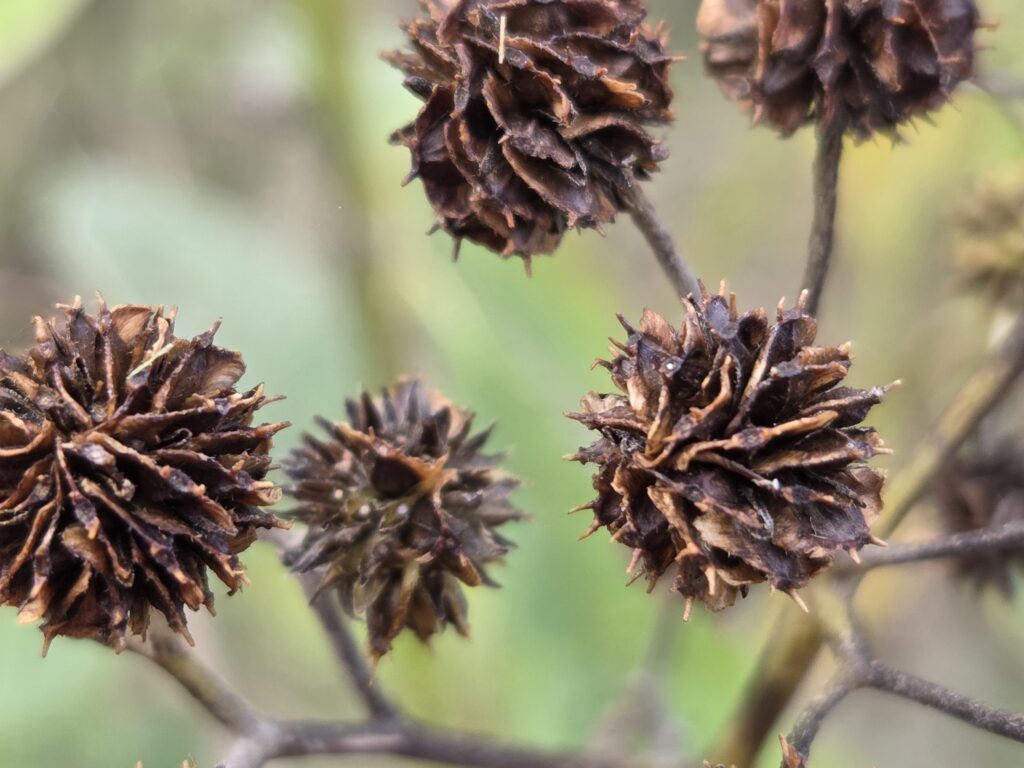
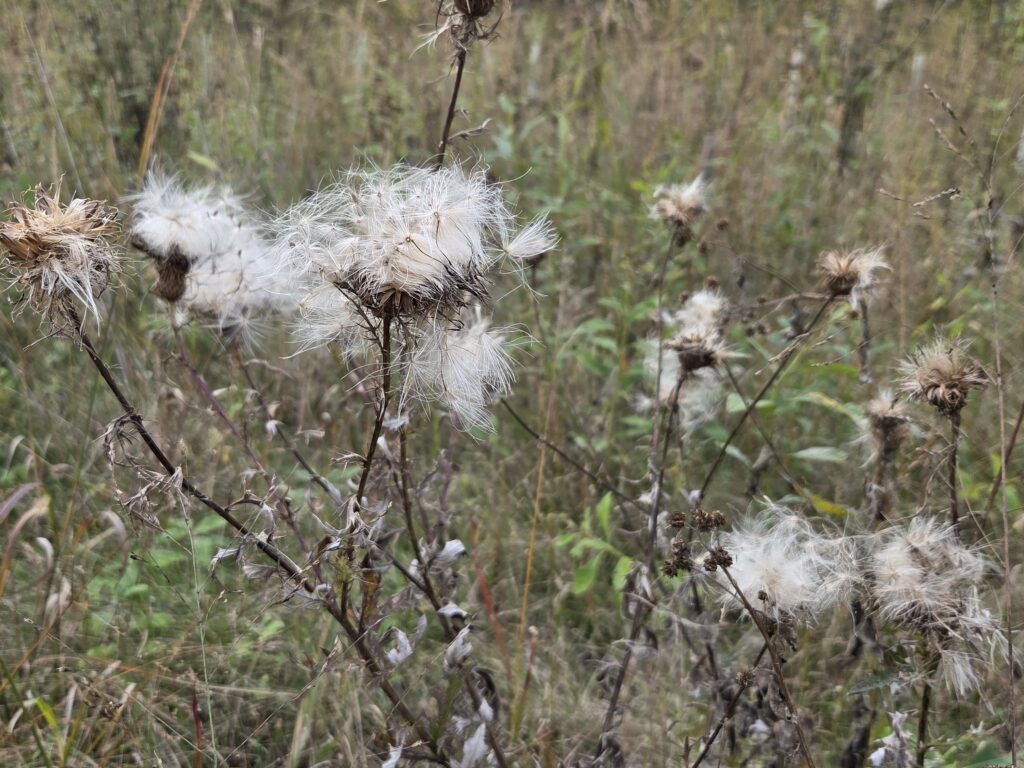
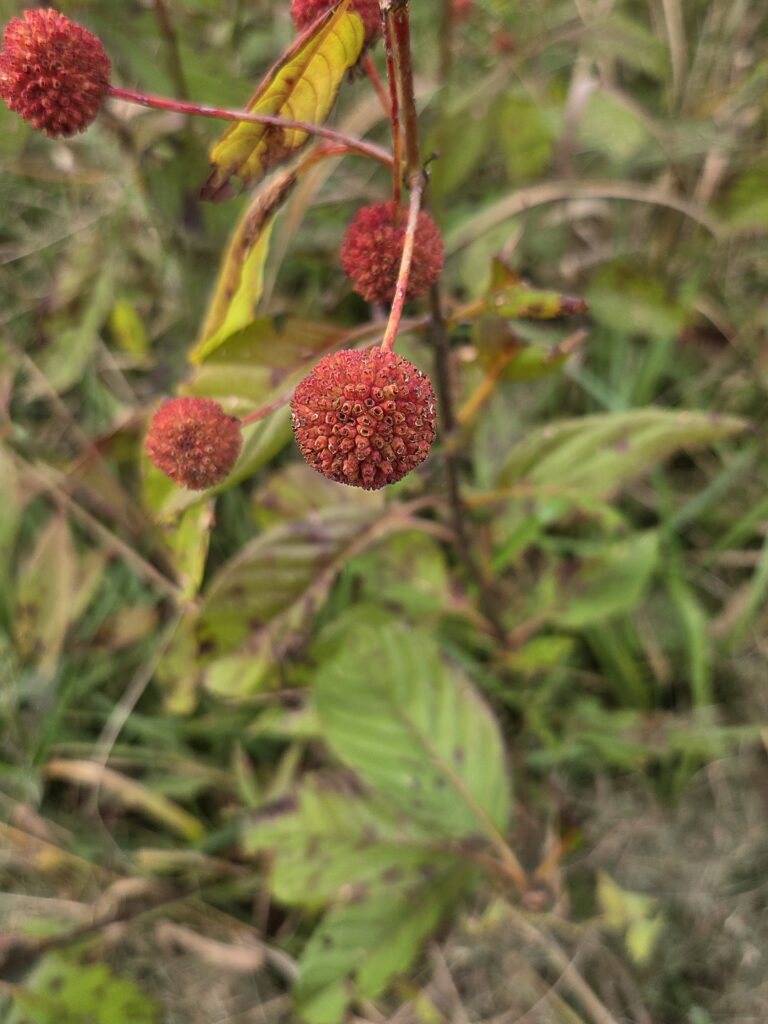
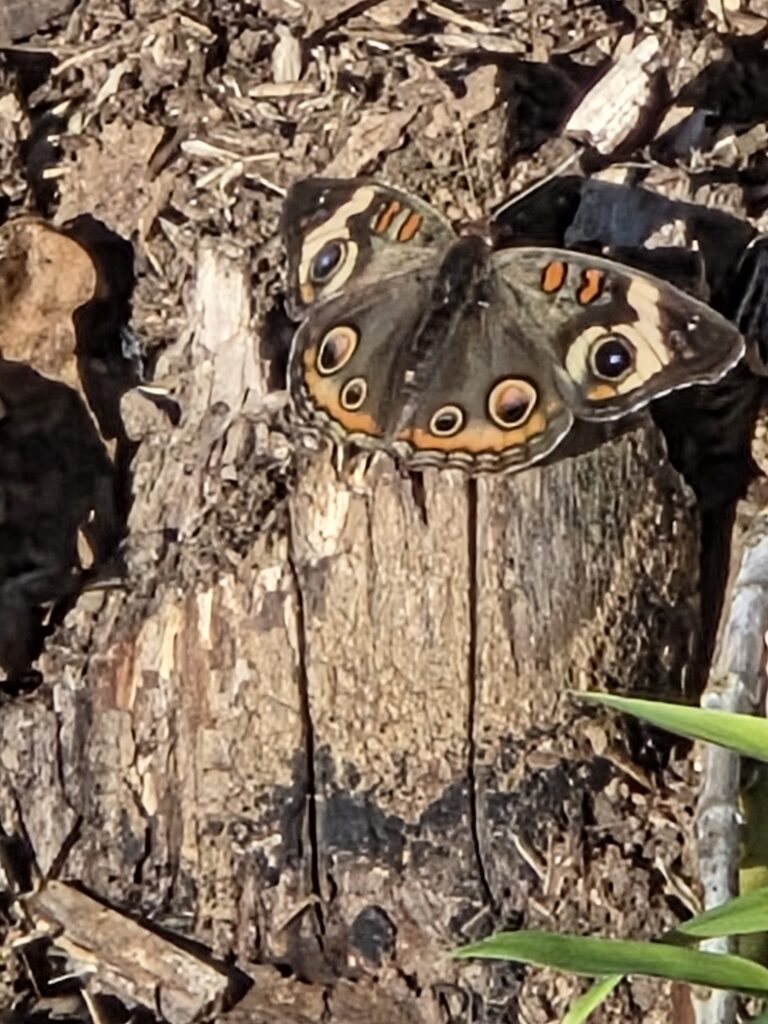
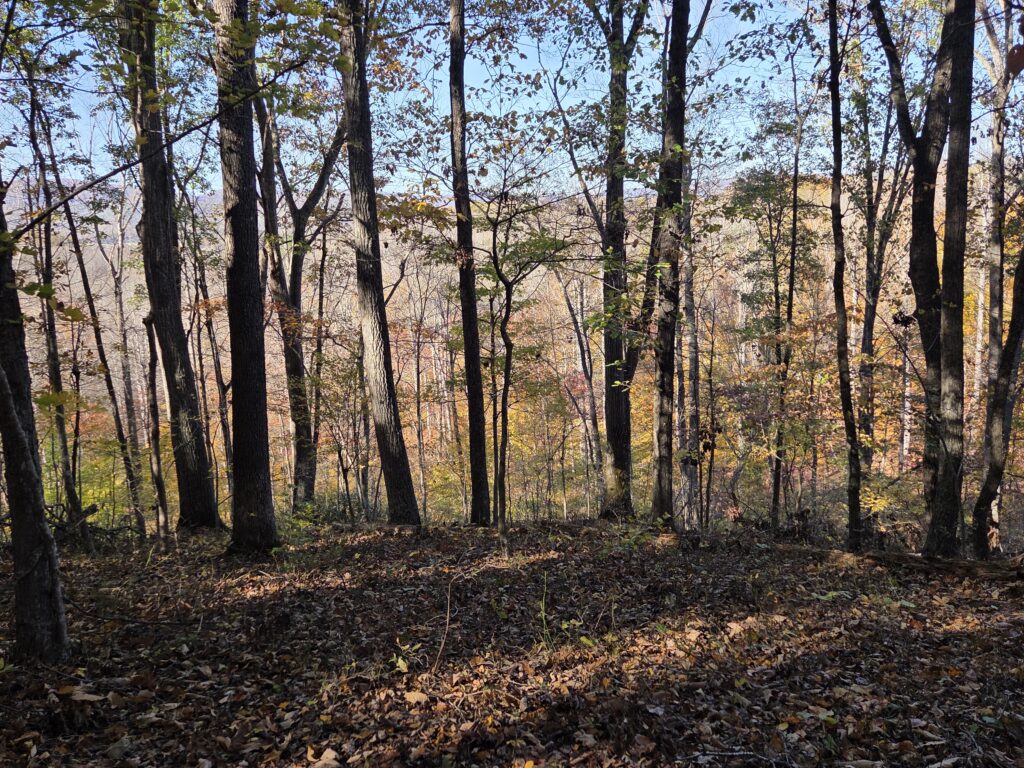
The fields are full of seeds. I especially love the seed heads of the ubiquitous Wingstem. They have tightly packed balls of winged cypselae clustered in a swirl pattern, and when loosed, each seed has 2 small spikes for clinging onto deer, coyotes, groundhogs, or my pants. From white fluffy seeds to the red seedheads of the Buttonbush, you can get a colorful collection on your clothes as you walk through avoiding the Mutiflora rose thorns. And speaking of avoiding….I do not have a photo of downy Agrimony (think aggravating + matrimony), which near my house is plentiful in the same fields that host the Wingstem. It has small, aggravating, thorny seeds that are the bane of any long-haired dog owner. Although it is a native plant and said to have medicinal properties, it can be aggressive, so I keep it out of the garden and enjoy it farther from the house! On the ramble when these photos were taken, I moved out of the field to a clearing where there used to be a grove of invasive bamboo, a buckeye butterfly rested, well-camouflaged amid the browns.
Fungi Galore
Heading into the woods I saw a shiny Horned Passalus Beetle trudging through the fallen leaves scouting for damp wood. In mid-September there were mushrooms everywhere: the Viscid Violet Cort, and a Webcap of some kind. One of the amanitas, the American Club-Footed Lepidella, had sprung up next to trees that fell long ago. Next up is Pinesap with fading flowers. Although it is in the heath family (Ericaceae), it is a relative of Ghost-pipe, and also gets its nutrients from soil fungi, making it a mycoheterotroph.
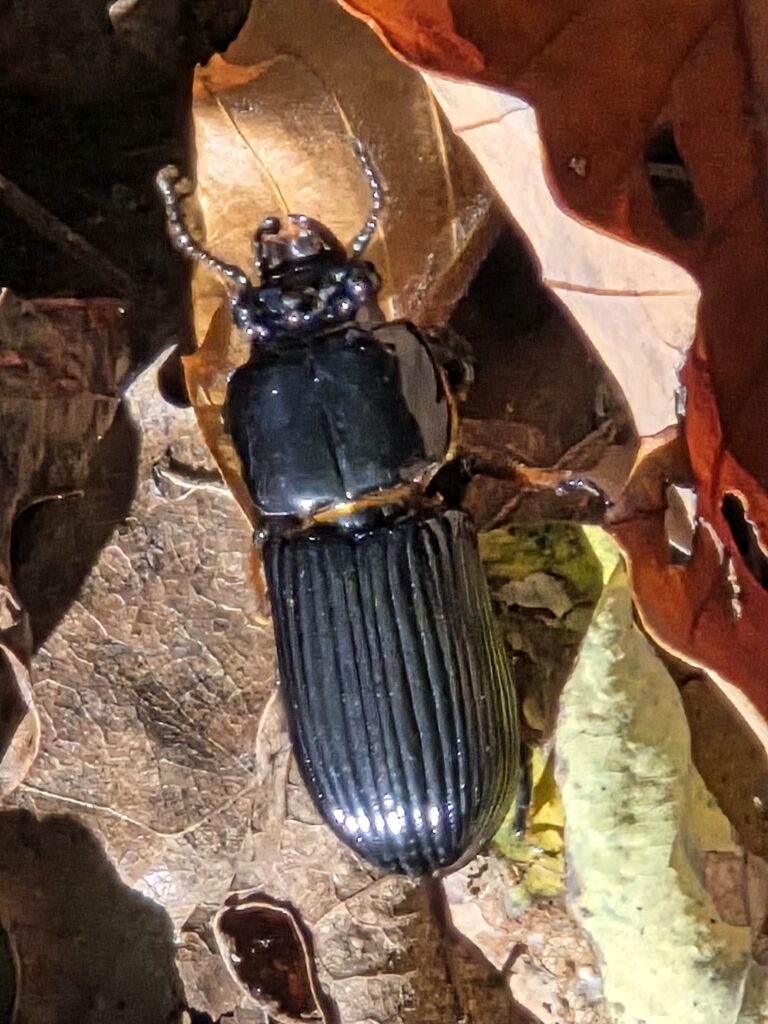 Horned Passalus Beetle
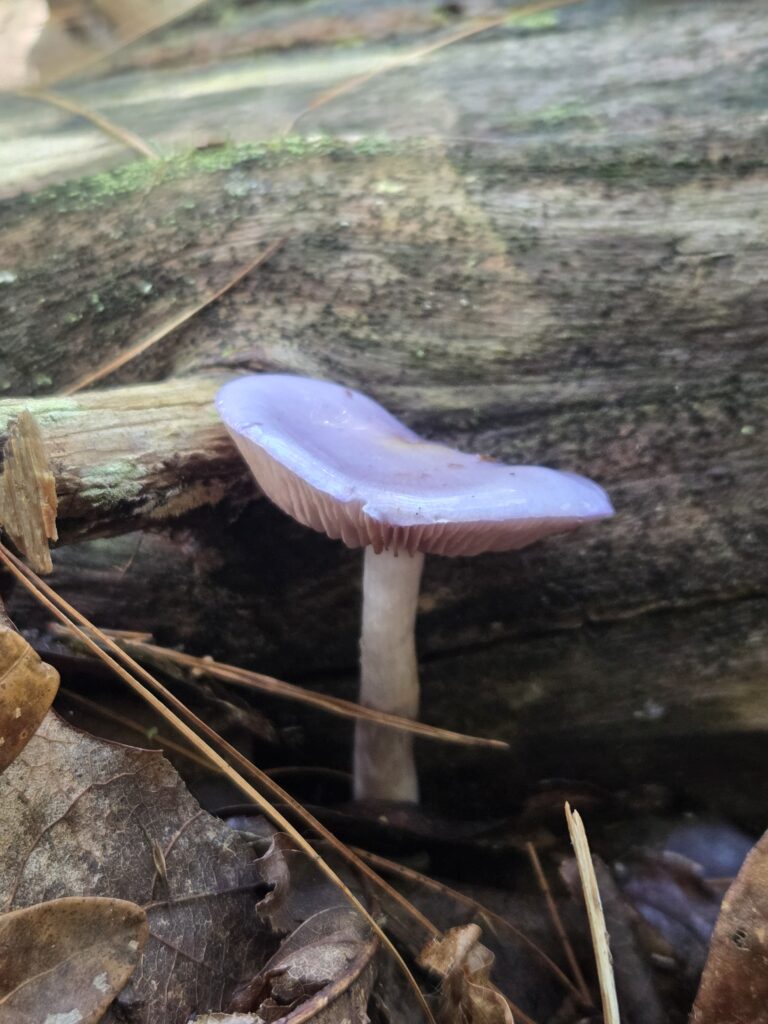 Viscid Violet Cort
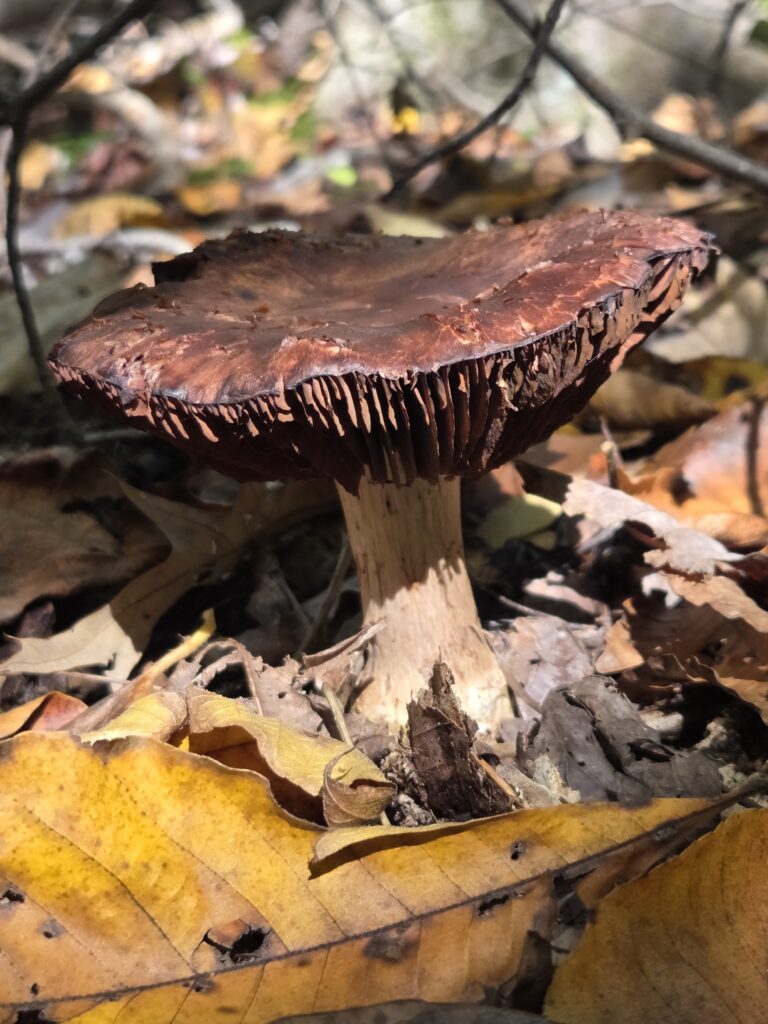 A Webcap (Genus Cortinarius)
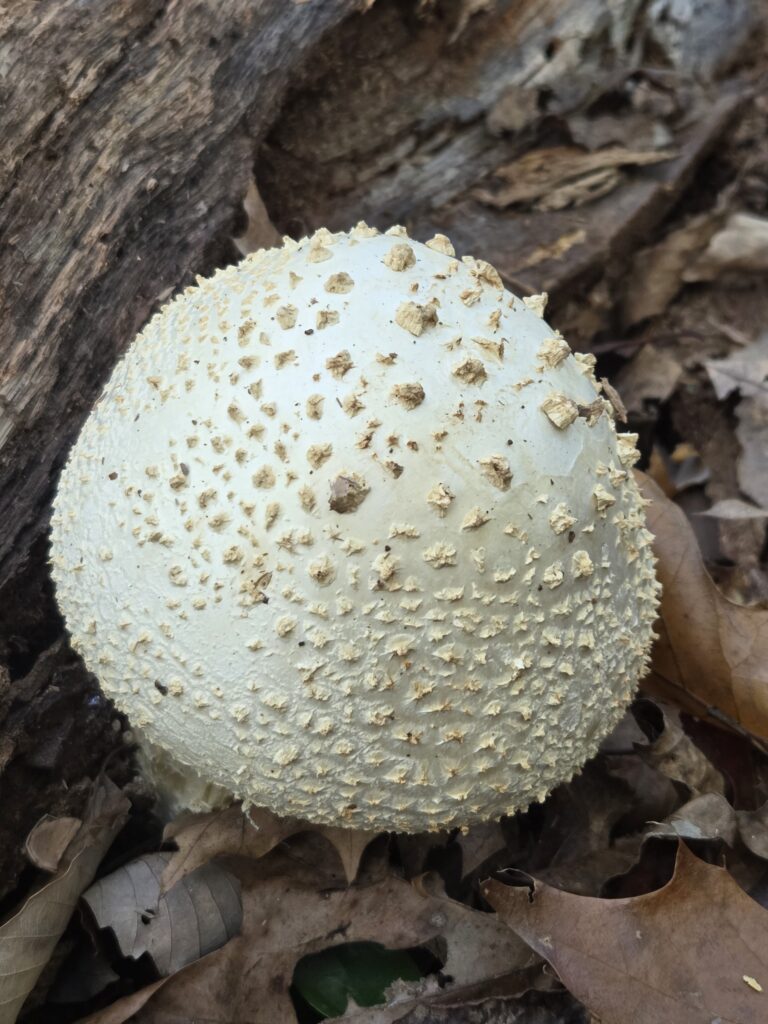 American Club-footed Lepidella (Amanita rhopalopus)
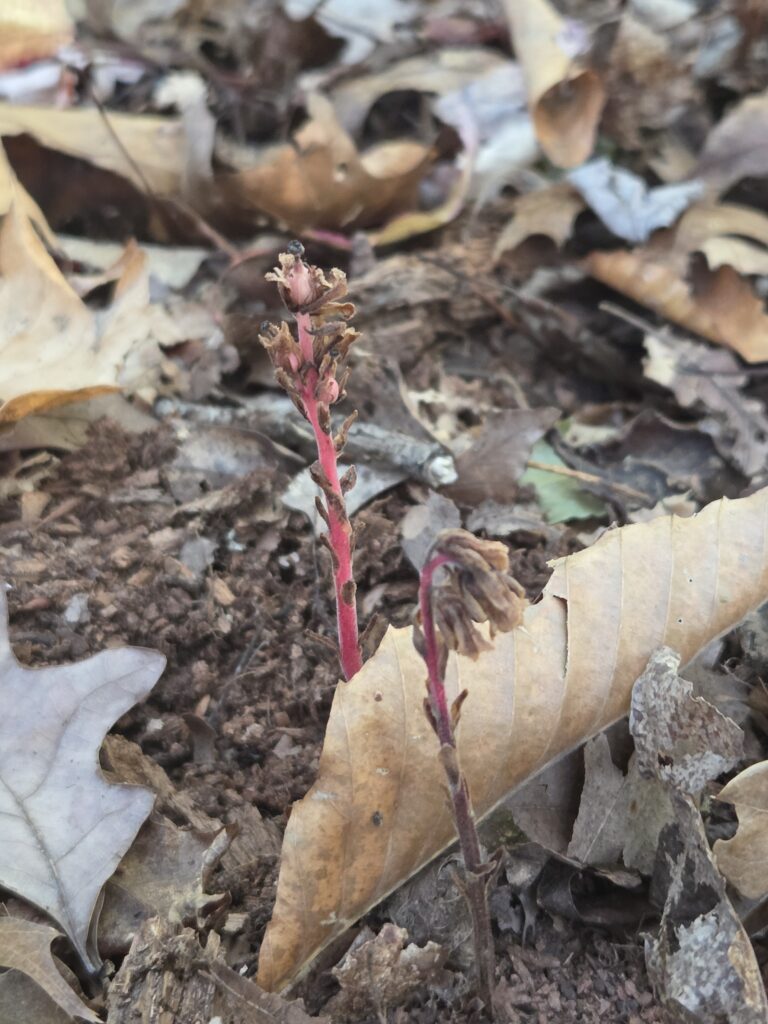 Pine Sap (Monotrops hypopitys)
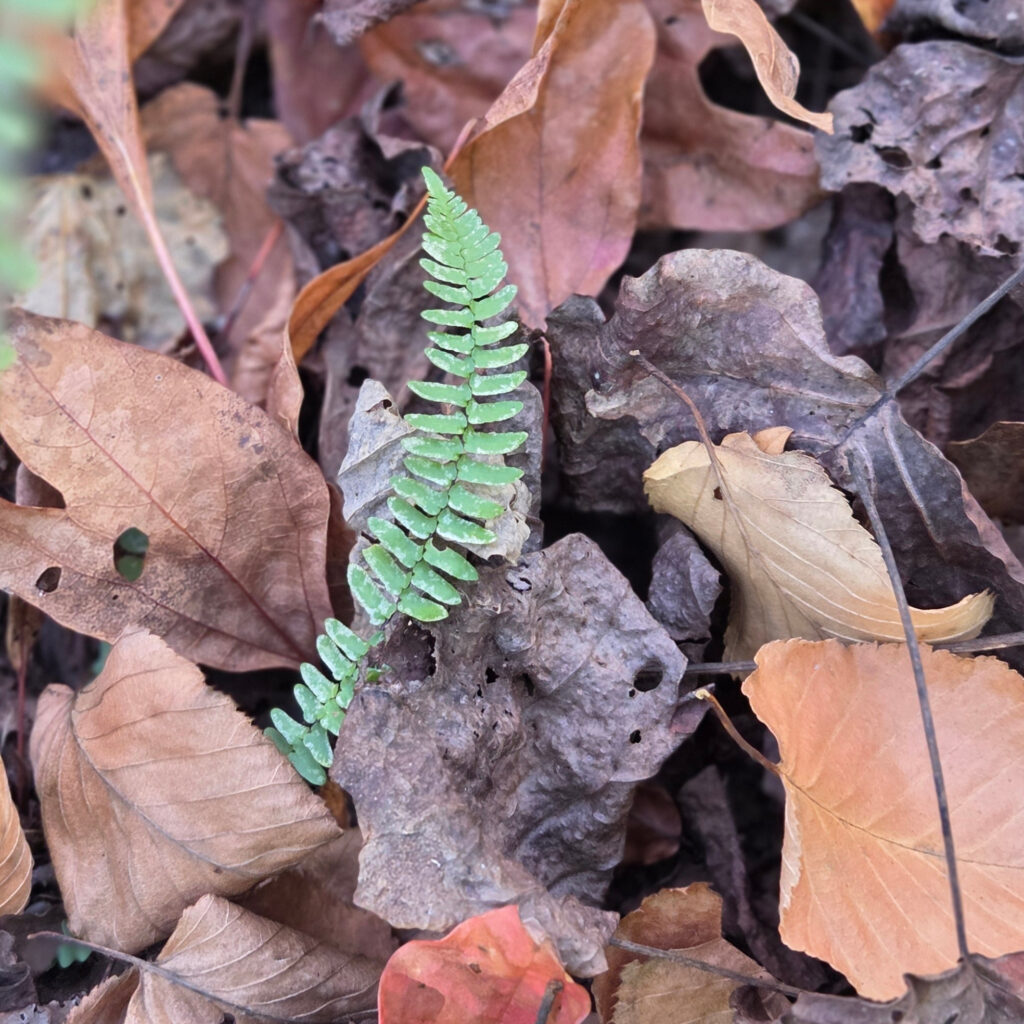 Ebony spleenwort
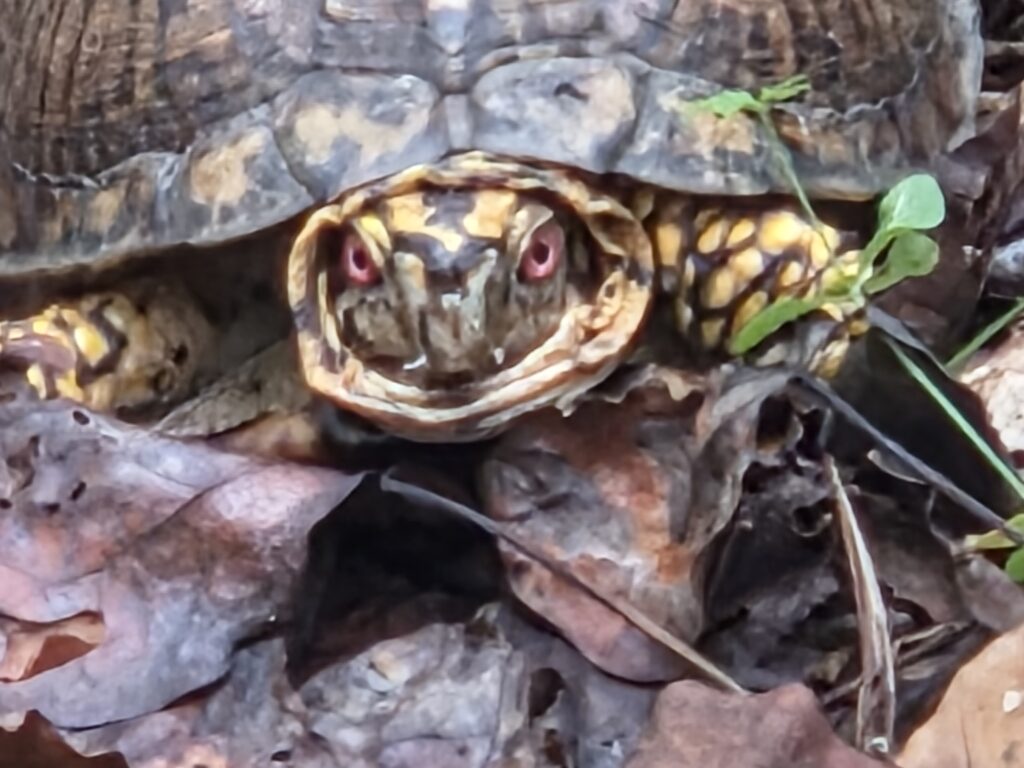
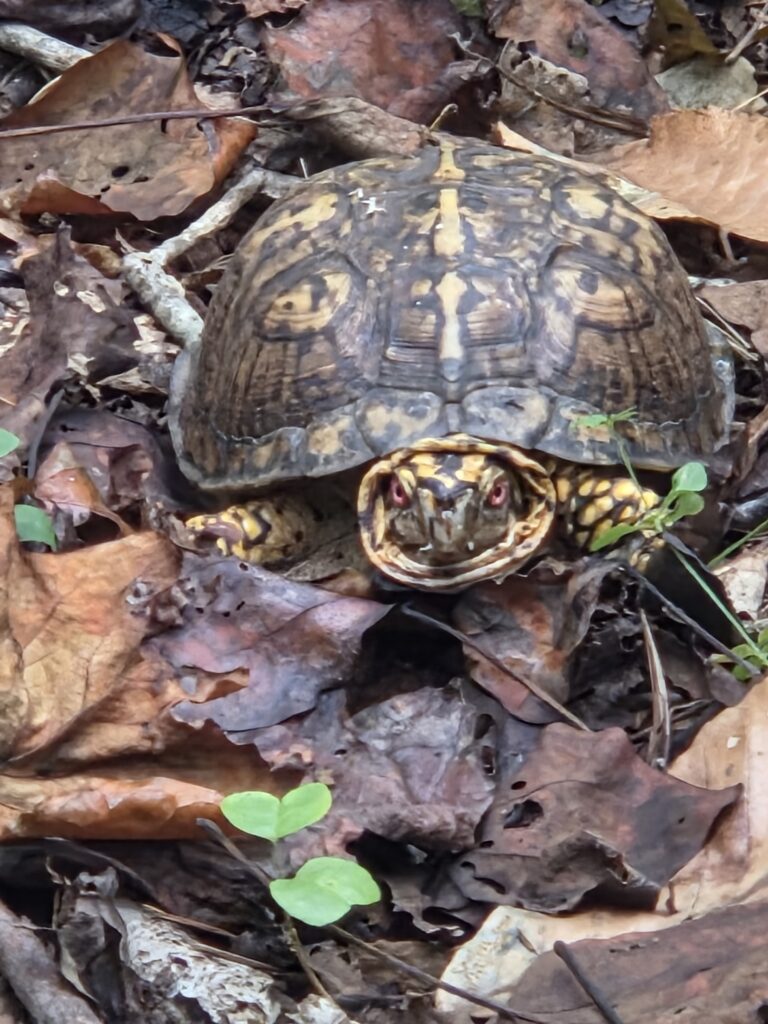 Eastern box turtle
 Can’t translate
The fern leaf with a telltale black stem is Ebony spleenwort. This is one of my favorite denizens of the shady forest. Not only does its evergreen fringe look cheery, but how much fun is it to say “spleenwort”! On this ramble an Eastern box turtle made itself known by making noise scrambling in the leaves, then as I approached to photograph, stayed stock still, blending in with the surrounding fall colors.
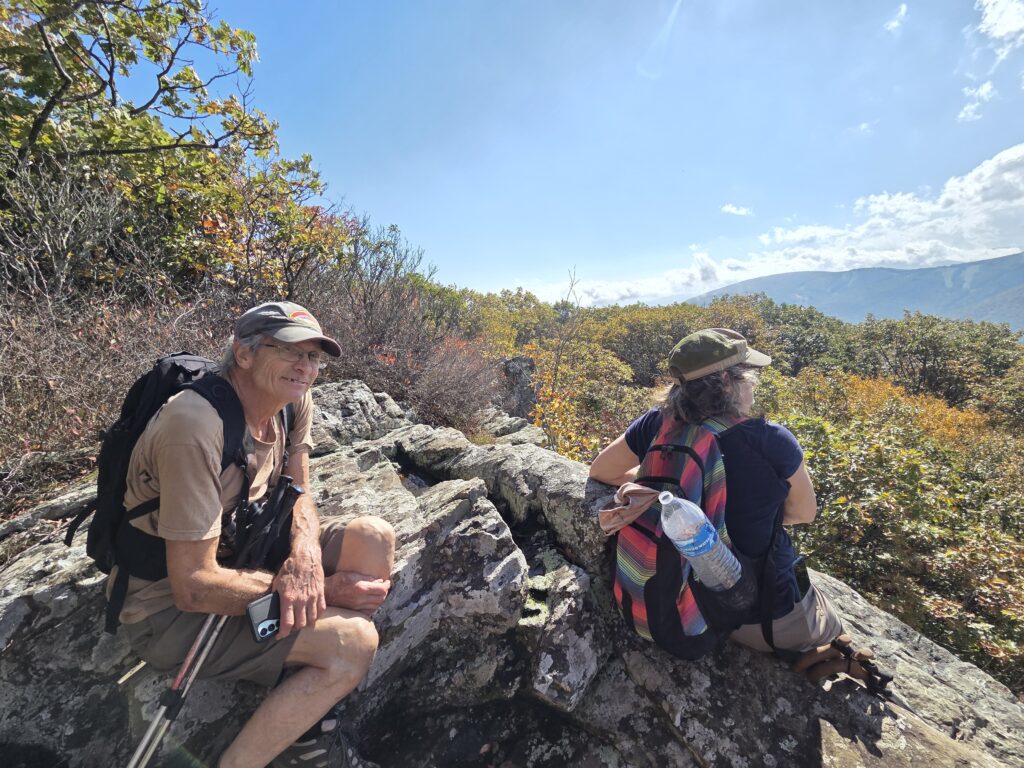
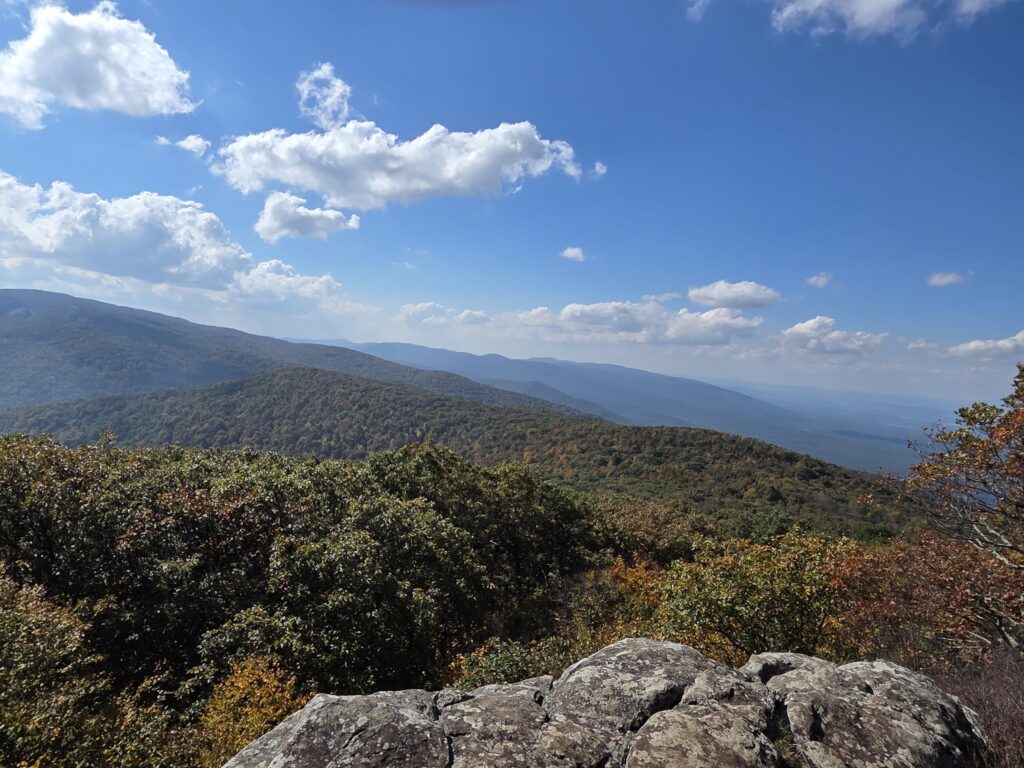 View from an overlook off the AT
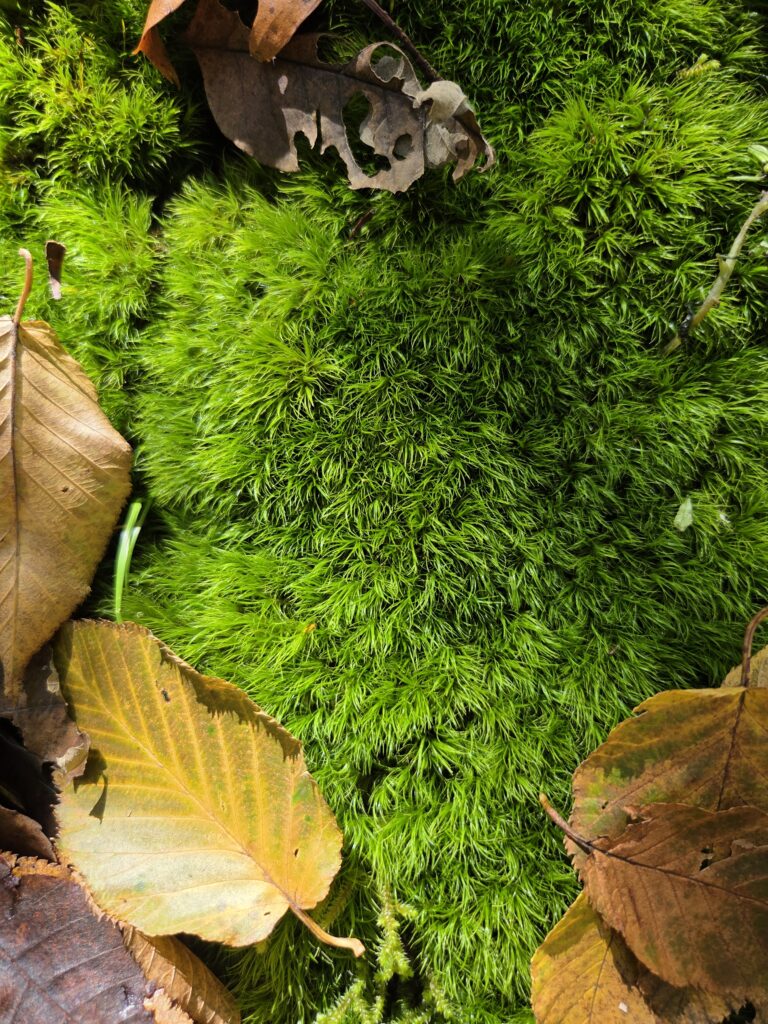
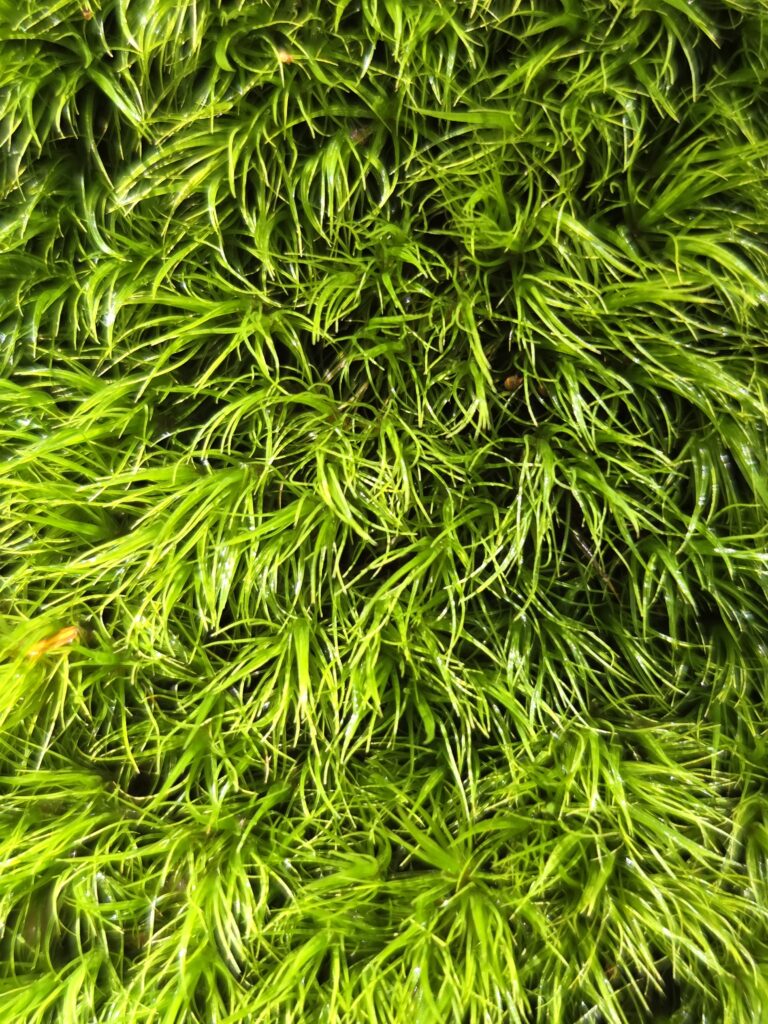 Windswept broom moss
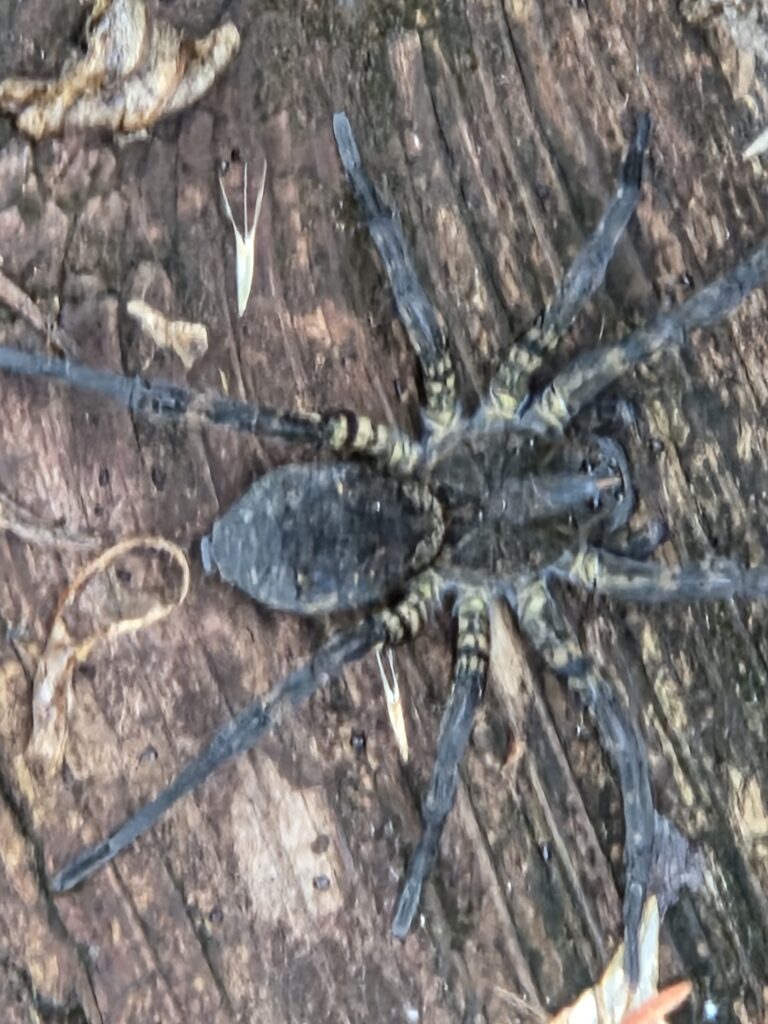 Woodland Giant Wolf Spider
Up to the Appalachian Trail
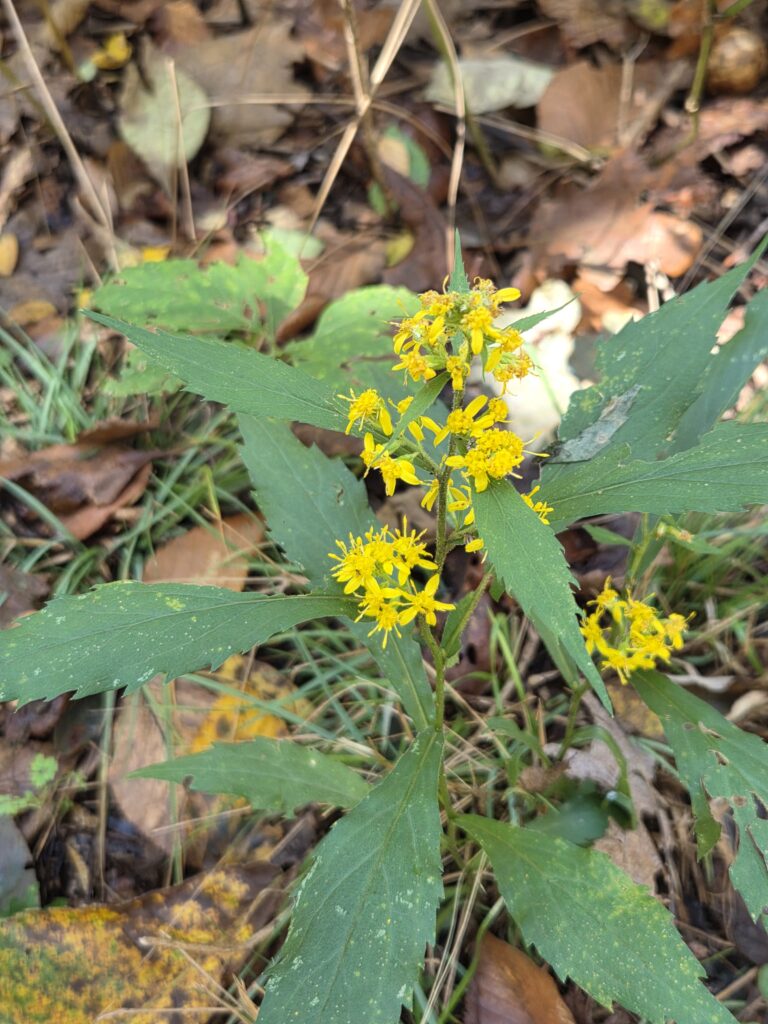
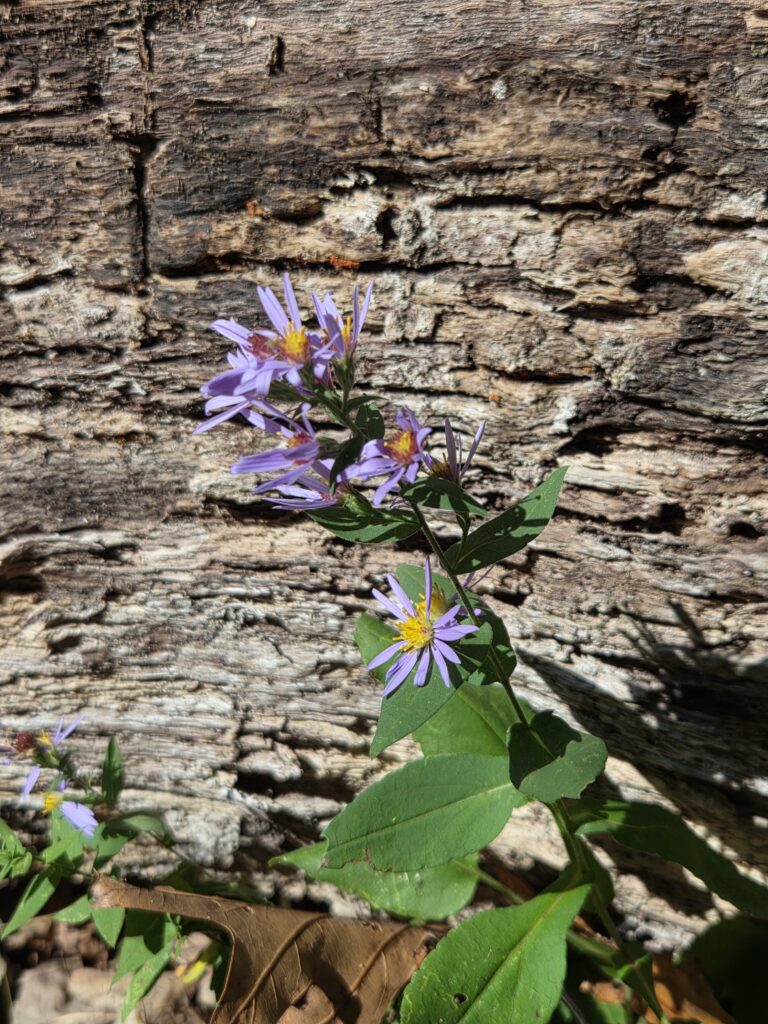
Sometime in October I and my partner in nature observation (and life) hiked with a friend from the Humpback Rocks picnic area up to the AT and headed north to a couple of lovely overlooks. There were still goldenrod and asters along the trail. On the way back we found some windswept broom moss – again one that I love simply because the name is so fitting and fun to say. The Woodland Giant Wolf Spider” is extra. I don’t recall on which ramble we saw this one. Actually now that I look closely I think that is the wood of my deck behind her – so she is a segue into the “critters we live with” section below.
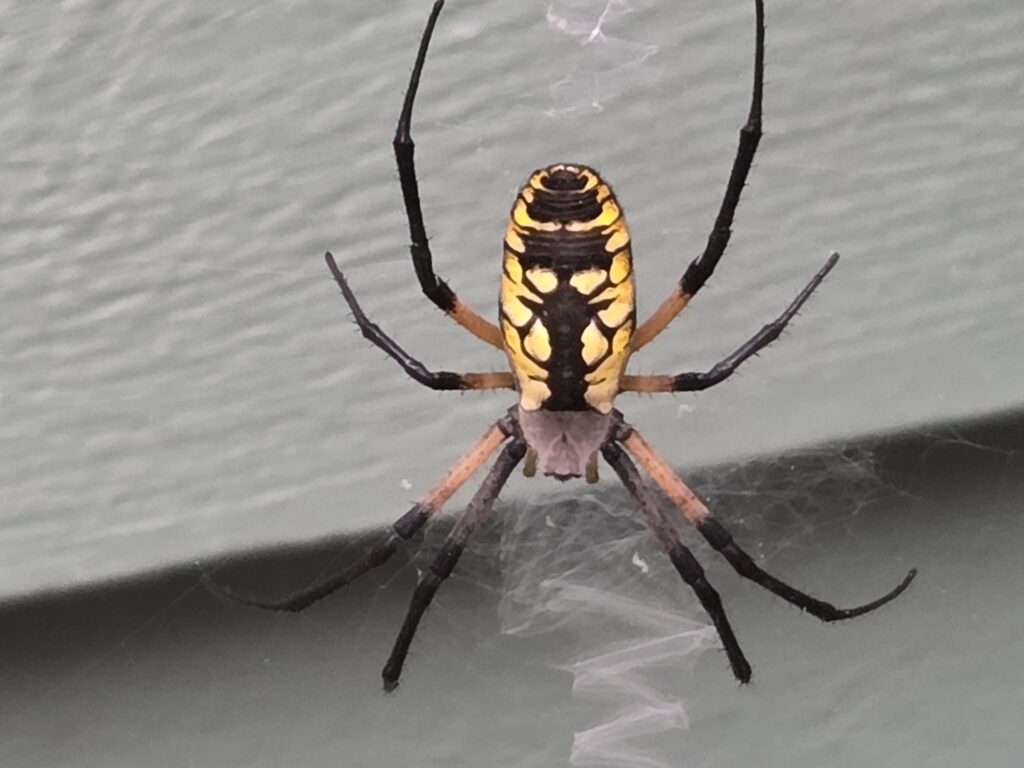 Yellow garden Spider
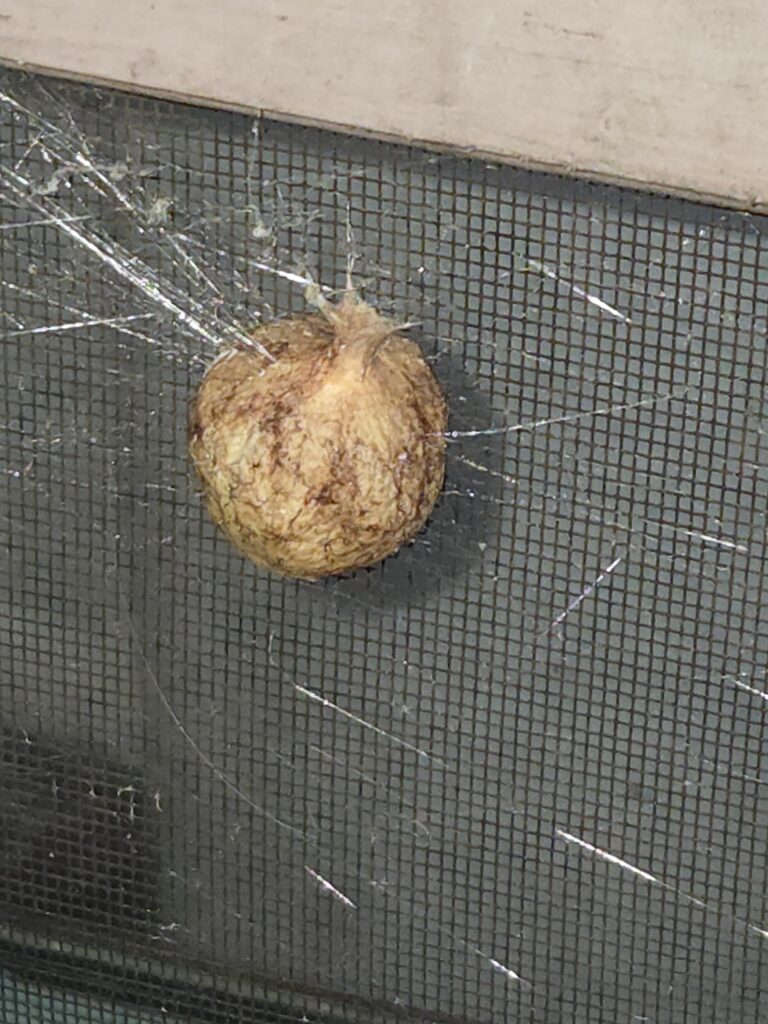 First egg case
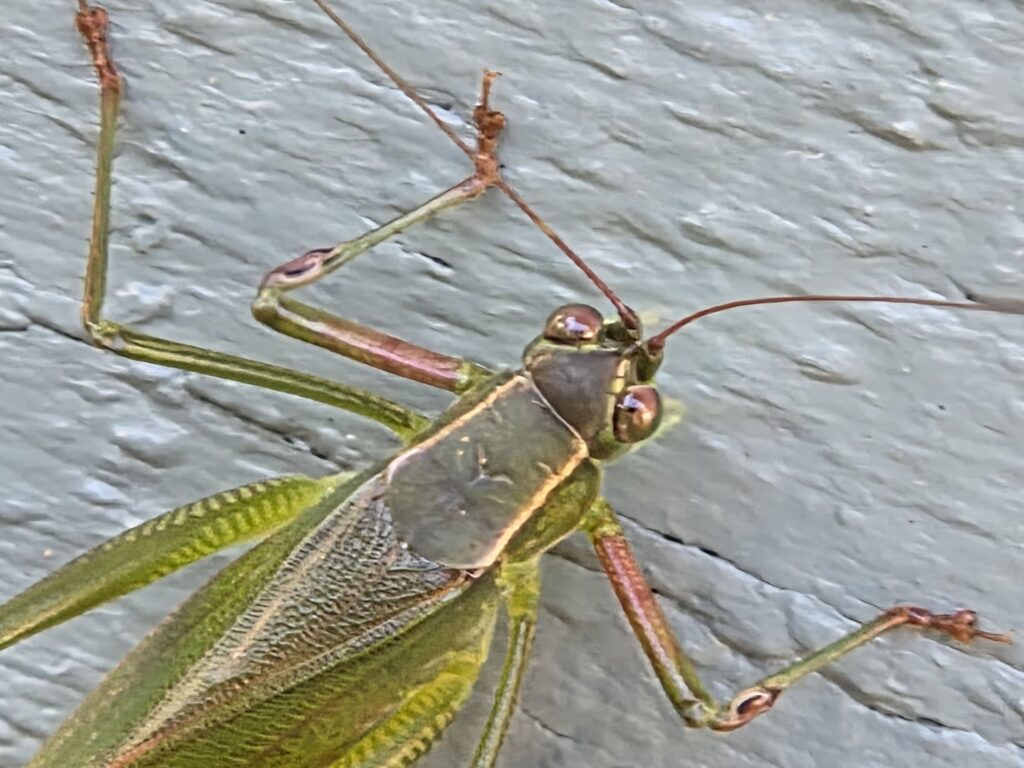 Katydid
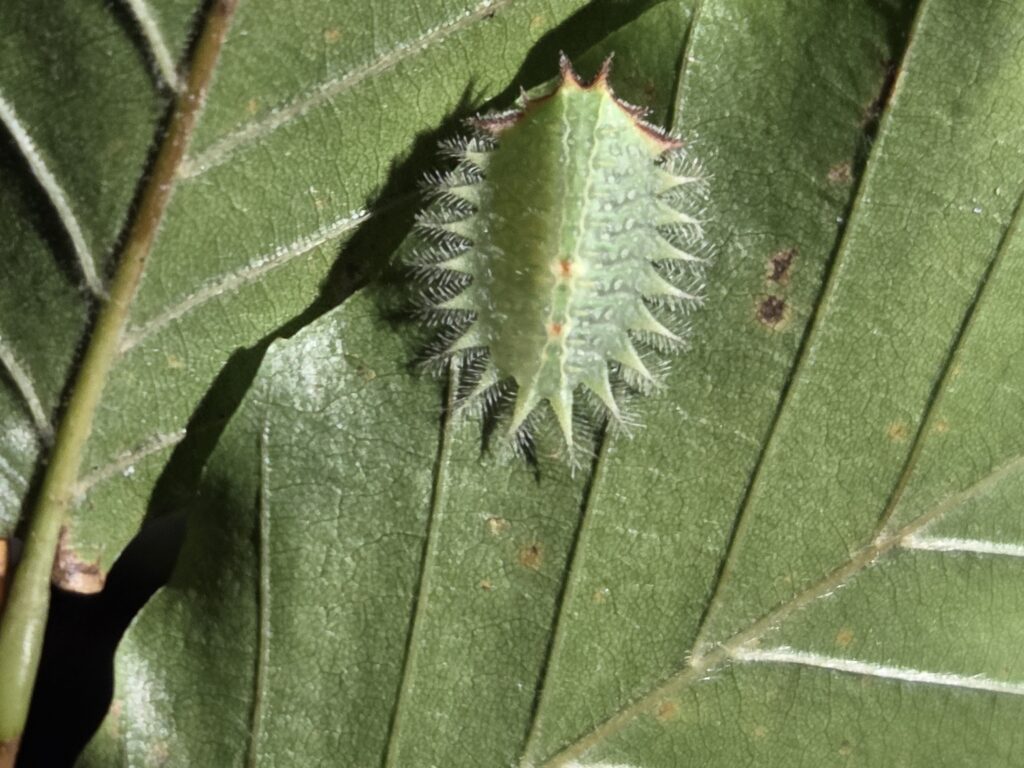 Crowned slug moth caterpillar
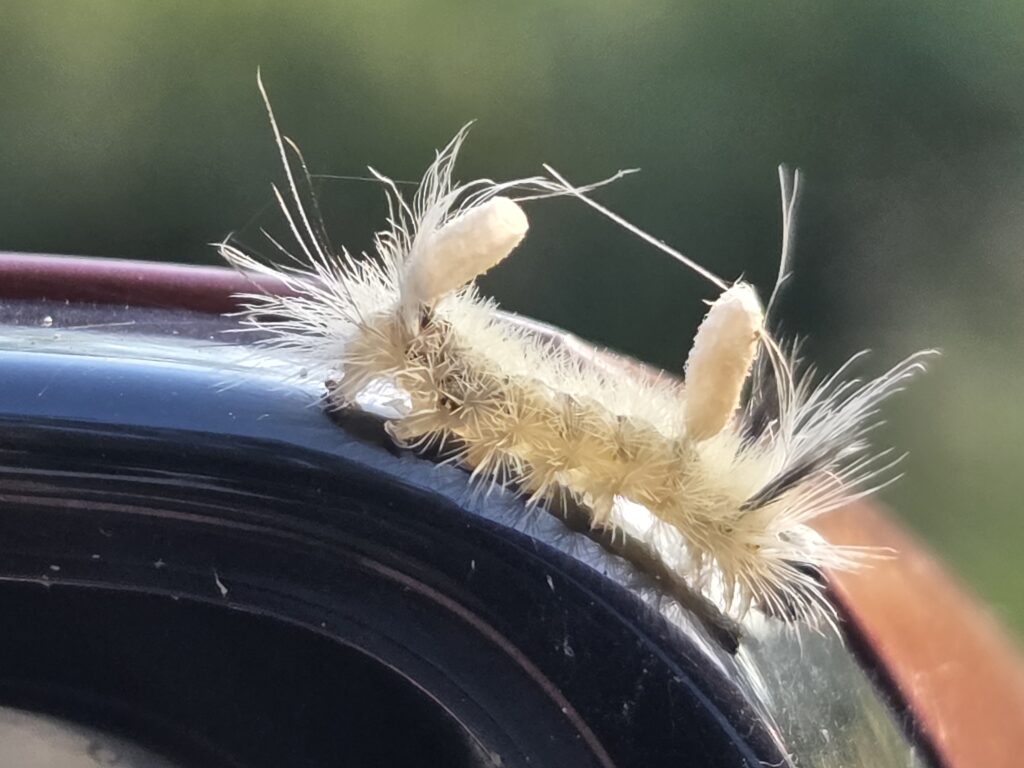 Banded tussock moth caterpillar with ichneumon wasp eggs
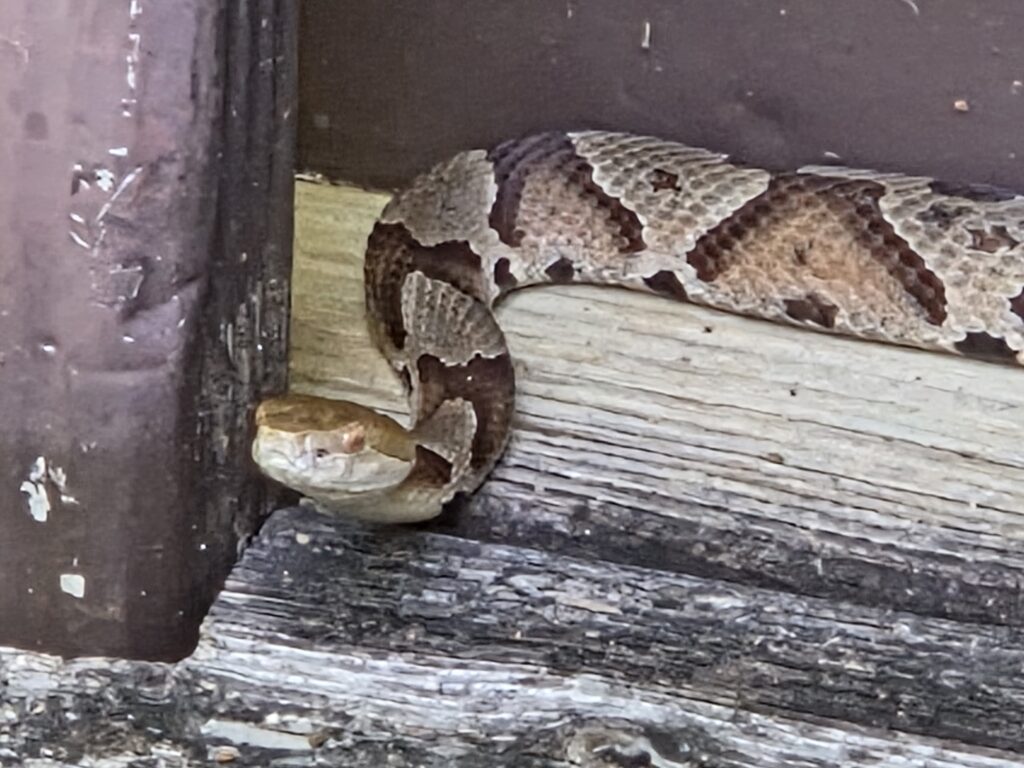 Copperhead
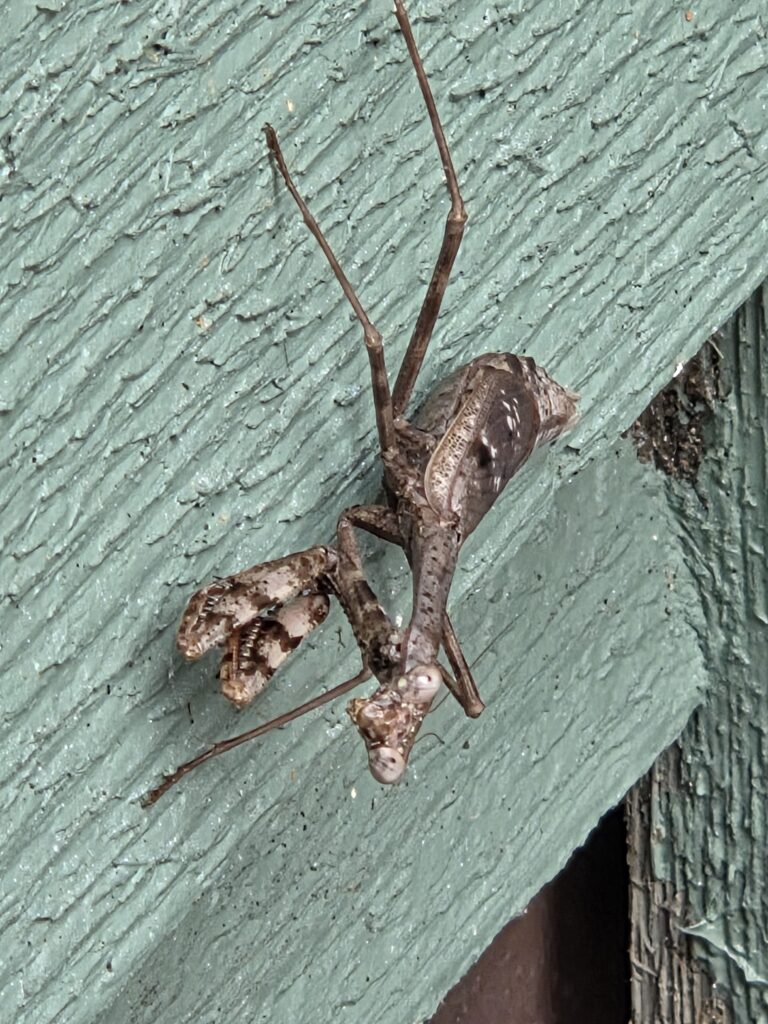 Carolina mantis
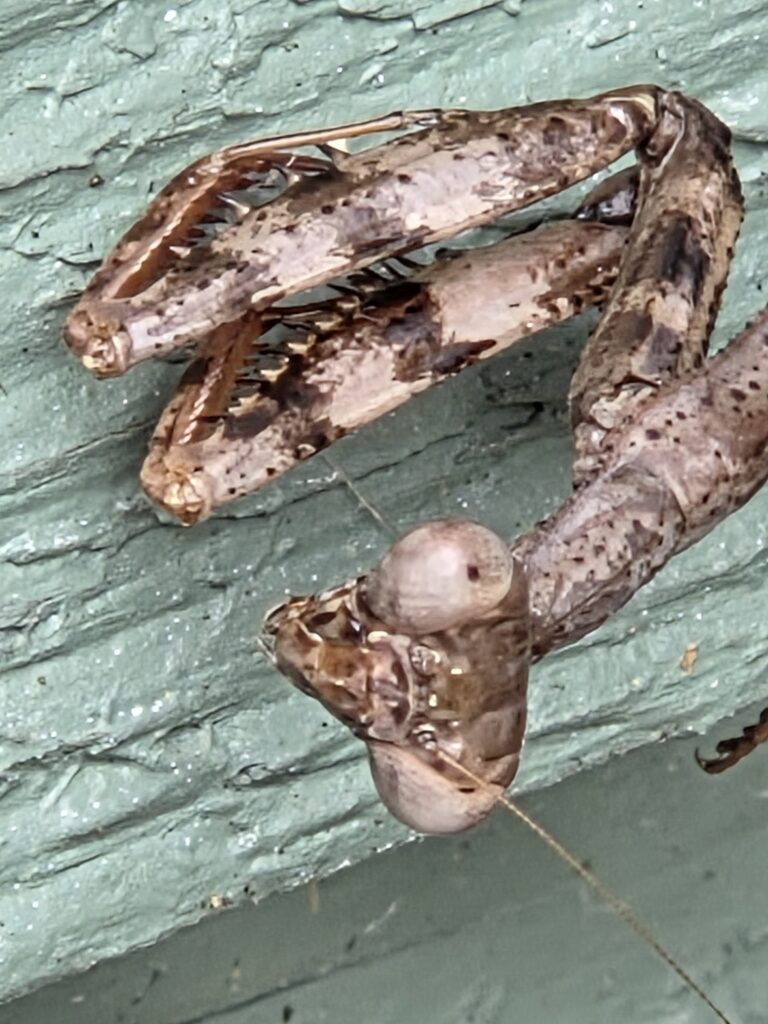 Hello!
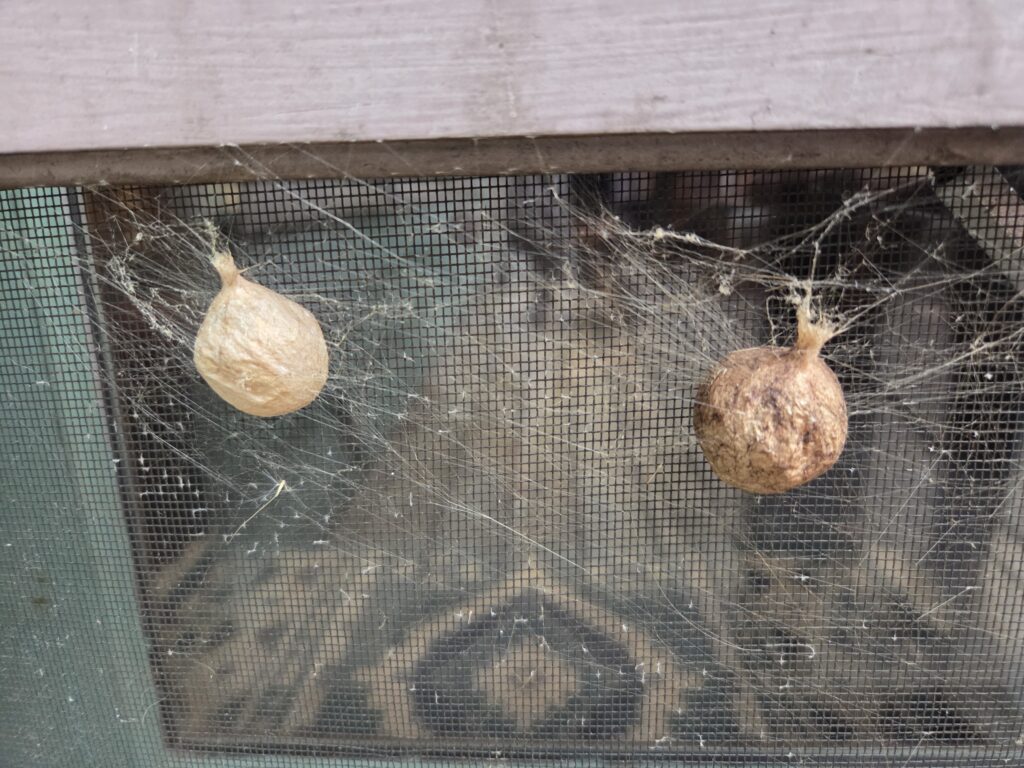 And then there were two
Rambling Around the Garden
Early in the summer the Yellow Garden Spider (writer spider! so called due to the zigzag stabilimentum you can see in her web) took up residence in a corner of one of the screen doors out onto the deck. In order to preserve her web we latched the screen and locked the inside door. For at least a month or more we saw her always on the web. Once we noticed she was consuming a fat katydid. They do sometimes wander too close. Later in the season the spider, made a huge egg case and webbed it into the screen door. As the weather got colder we expected her to die, but she kept on keeping on. Toward the end of October we awoke one morning to a second egg case tucked into the screen! Then, like EB White’s Charlotte, one day she was gone. We’ve got the screen door hooked open against the side of the house now for the winter so the egg cases will be well protected from anything that might want to eat them. I hope we’ll get to see the hatching in the spring. Note about the copperhead – we ushered it into a bag and took it far from the house for release.
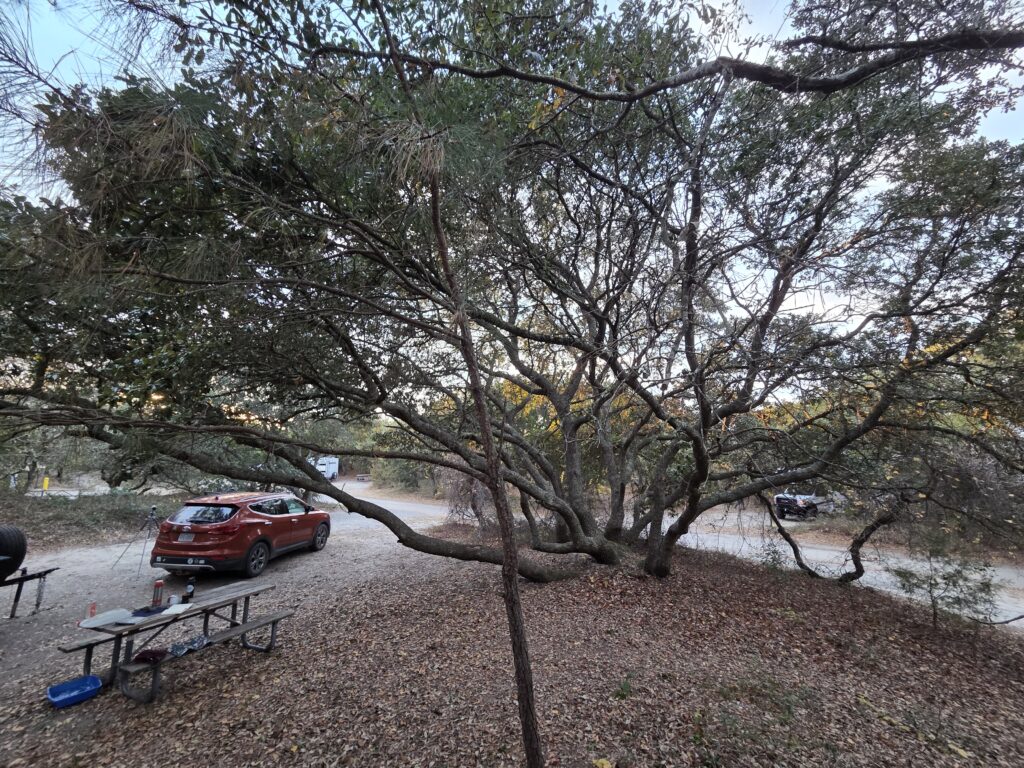 One of the 3 enormous Live oaks surrounding our campsite – this one estimated at 80 years old.
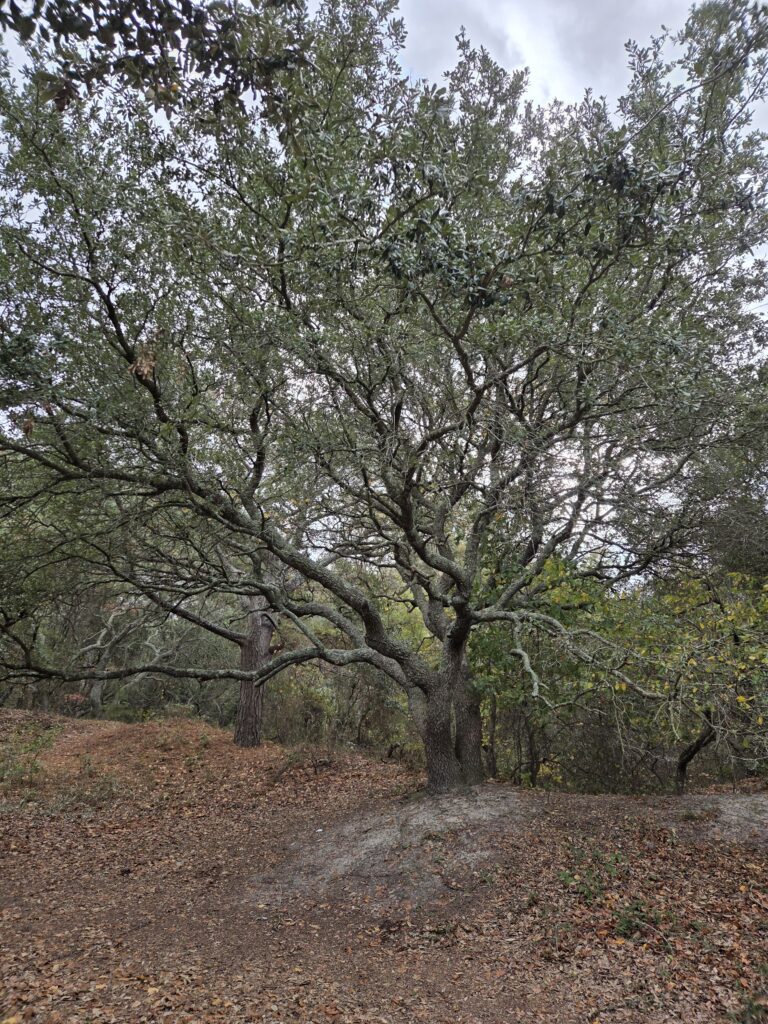
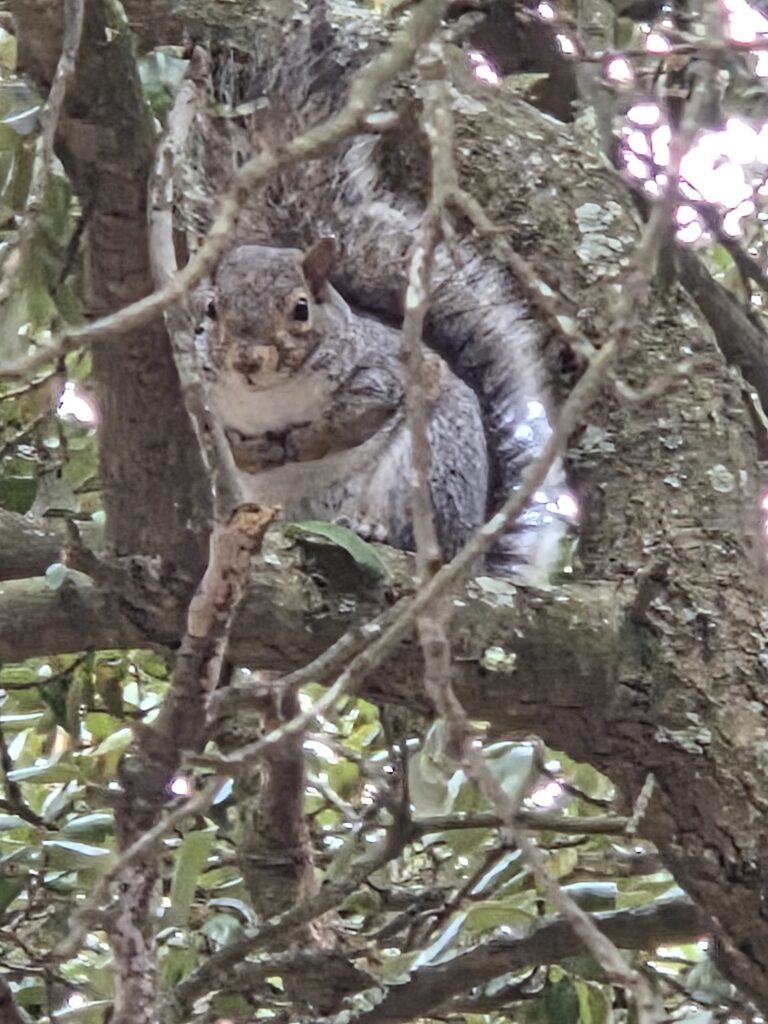 Morning greeter
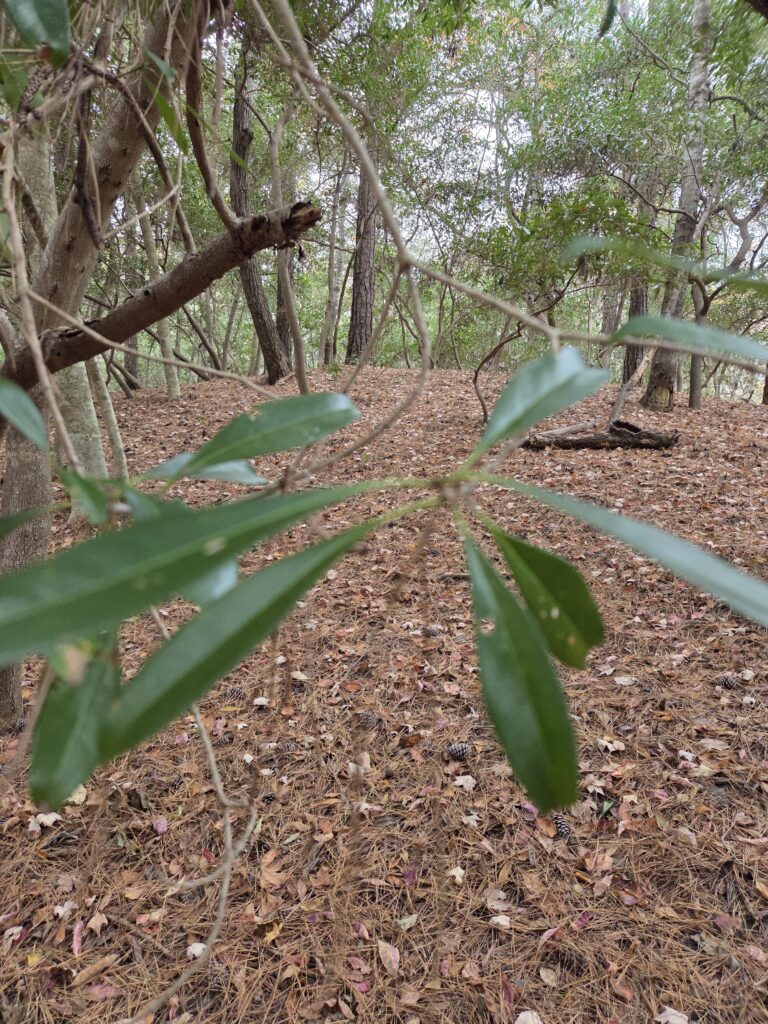 Wild olive, Osmanthus americanus
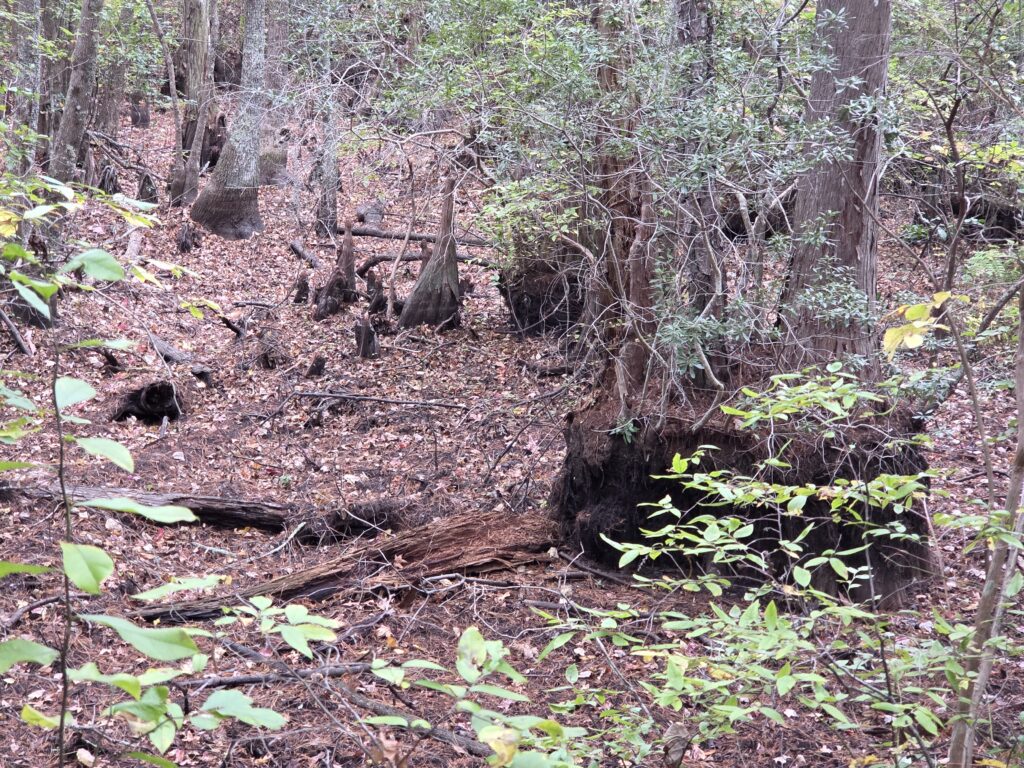 Cypress knees
First Landing State Park
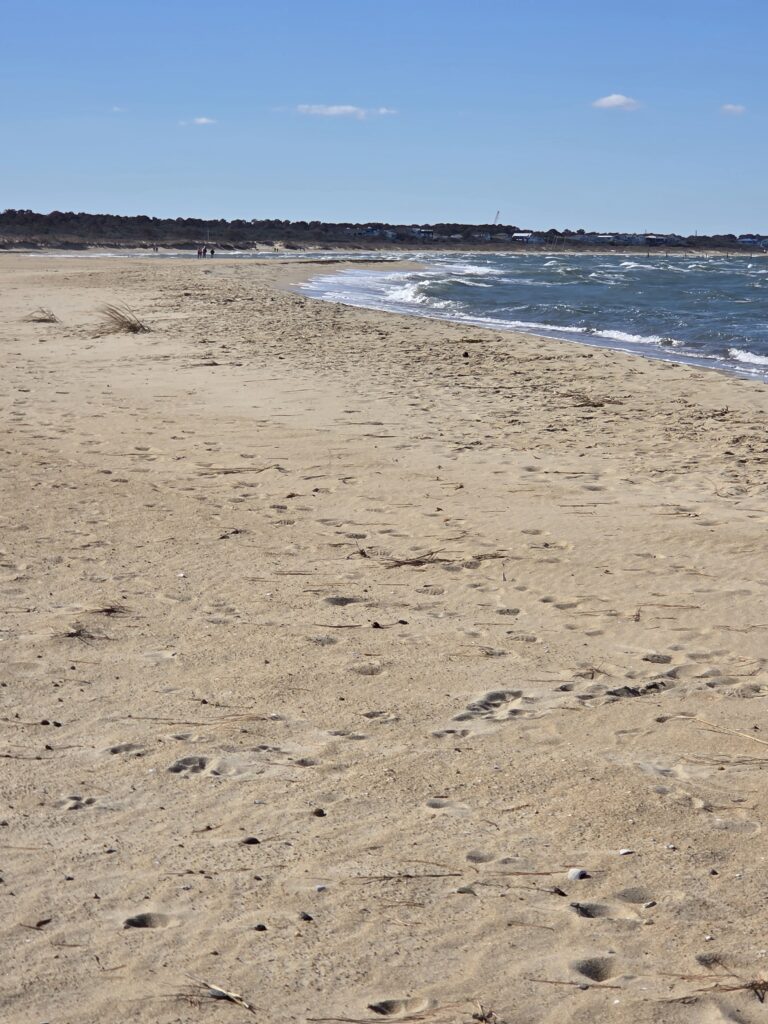
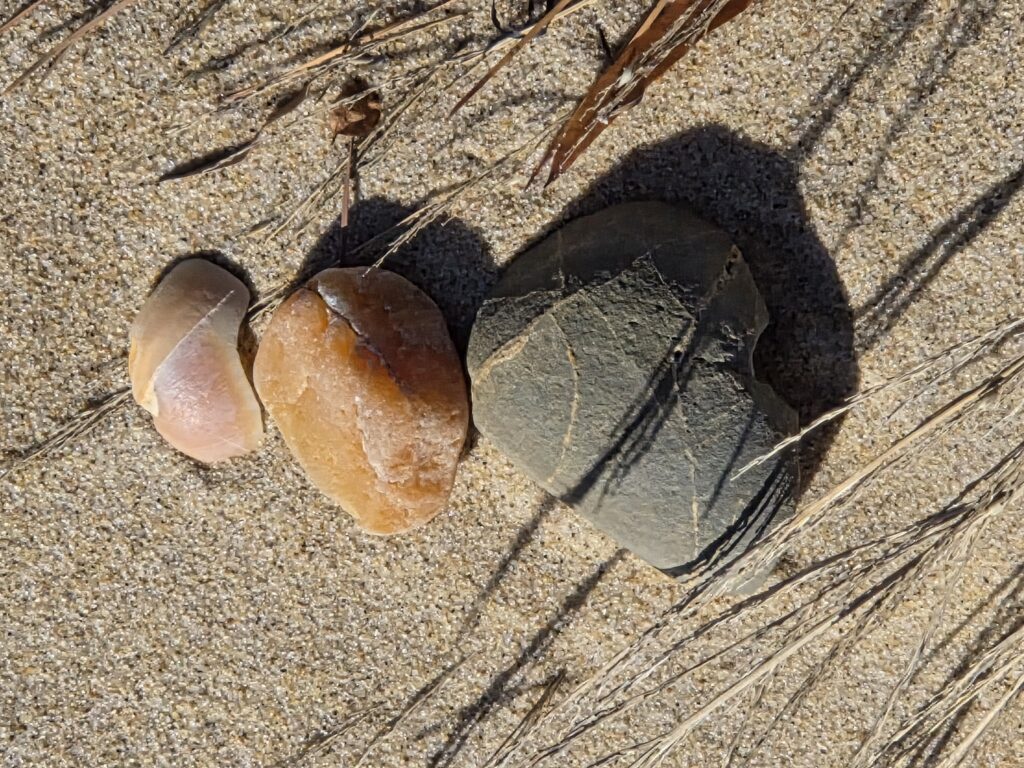
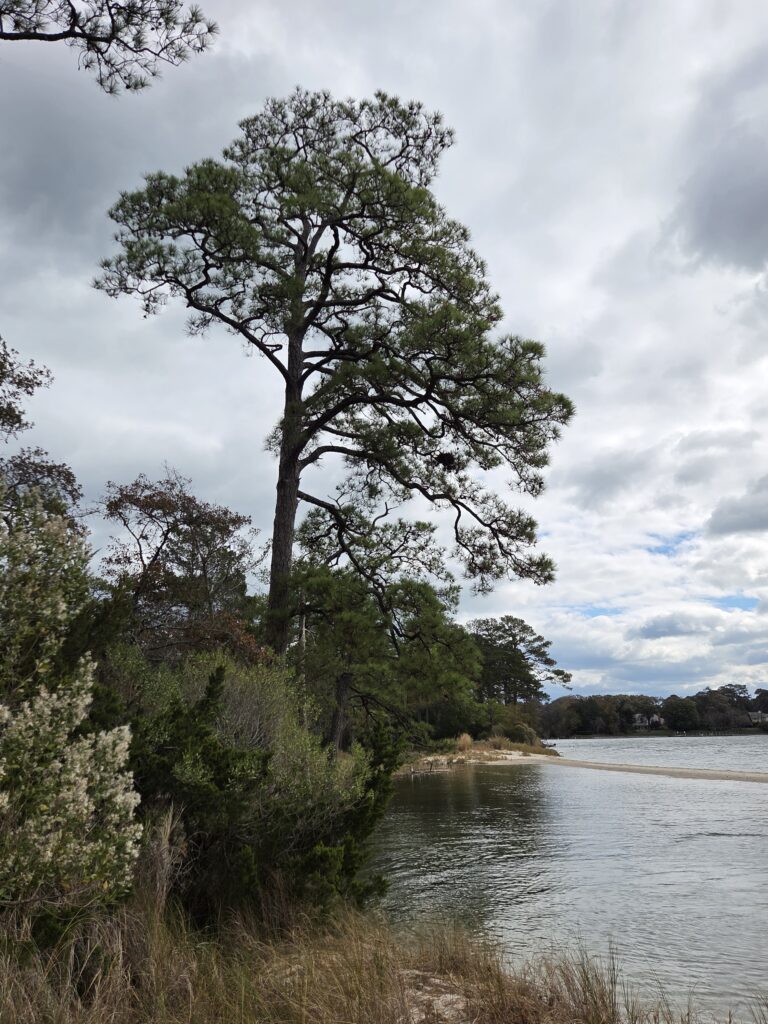
In early November we headed to First Landing State Park. Once there we rambled around the beach area, the inland ponds, the cypress swamp, and Osmanthus trail. All along we thought we’d been seeing mountain laurel, but no – turns out the trail was named for this prominent plant (face palm) and on looking it up we found it is called Wild Olive or Devilwood and grows only in SE Virginia along the shore. That’s it for now until the winter rambles begin!!
Leave a Reply